FOREIGN POLICY
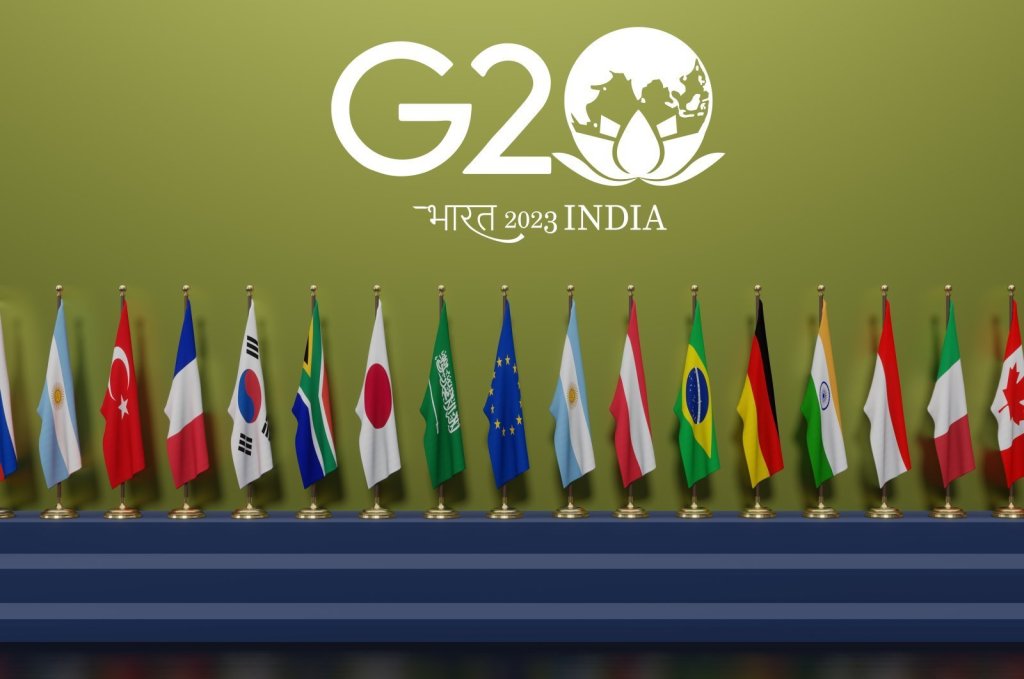
It is widely believed that India is having its golden era of diplomacy, and this just happening at the back of the turmoil that rocked the world since February 2022, is no less phenomenal. The year 2023 is going to be an year for India to remember forever. India’s prowess in diplomacy will be tested and graded whole throughout the year as it hosts the G20, the Shanghai Cooperation Organisation (SCO) and QUAD Meetings simultaneously. India’s strategic engagements and hosting of major summits in 2023 are in line with PM Modi’s vision of “multi-directional engagements” instead of traditional non-alignment. India’s participation in reviving the QUAD and joining the SCO as a full-time member in 2017 demostrates its proactive approach to countering China’s assertiveness and expanding its global influence. India’s stance on Ukraine war, serve as a “balancing force” that influences other countries in South East Asia and the Global South to manage their ties with the West without fully aligning with its stance on Ukraine or sanctions on Russia. The success of India’s autonomous strategy or multi-alignment is evident in the growing recognition and support it receives, including France’s recent reiteration of “Strategic Autonomy” following French President’s recent visit to Beijing. This Highlights the existence of divisions within the Western coalition itself on this matter. This Write Up is a Guide on India’s Diplomatic Navigation in the year 2023 and beyond, and discuss some of the steps policymakers need to take inorder to fulfill the desire of establishing PAX INDICA!
CHANGING DYNAMICS
Currently geopolitics is in a flux. The Power dynamics is changing radically, the hegemon who policed the world affairs up till now is worn out and is on a retreat and new powers are emerging on the scene to take the charge. The moment has arrived for India to make some serious move vis-a-vis the geopolitical scene. It can no longer stay aloof ie; Non-alignment which it had opted when the tussle was between the US and the USSR, rather it needs to navigate strategically through the intricasies of diplomacy in the age of the US – China rivalry. Untill we acquire enough economic and military might, we will have to bide time by consciously manouvering through the complex diplomatic hyperbolae.
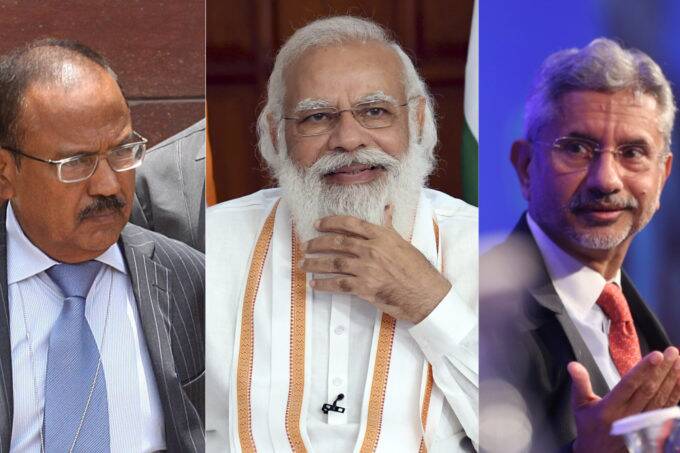
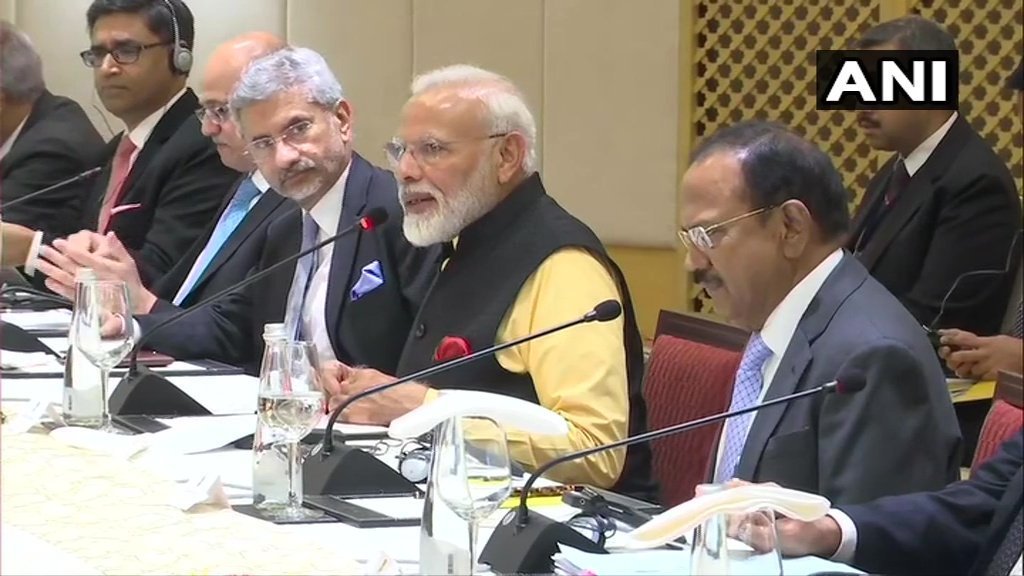
The sea of change in strategic thinking in the foreign policy front brought in by the Minister of External Affairs Dr S. Jaishankar is commendable. From being the Second fiddle to the PMO to a strategic think tank that harks the highest attention during every bilateral meeting that India has with any nation, MEA has finally arrived at its rightful place. Due credit is also reserved for the PMO who has virtually given a free hand for the Minister to call the shots in this realm as per his intellect. I believe the Minister is the right pick for the Job at the right time as this Ministry will be the key driver in India’s Growth Trajectory to the hightables of geopolitics and geoeconomics.
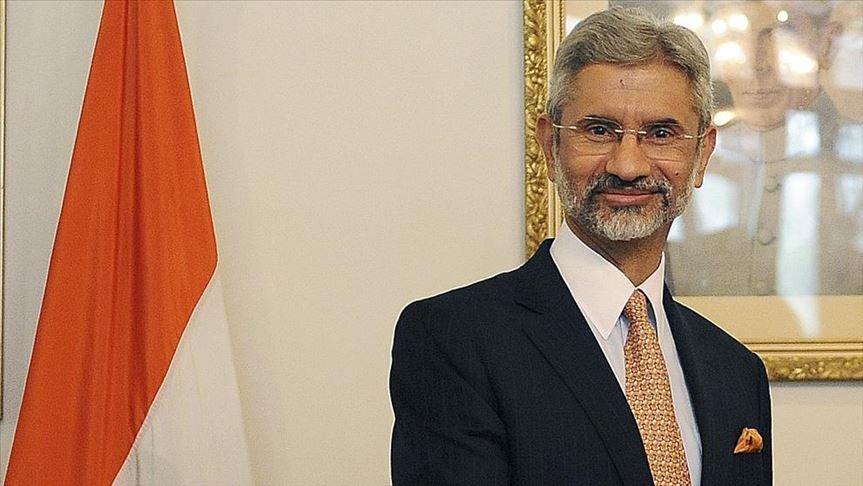
While China before the advent of Modi was “he who must not be named” for Indian diplomacy, the Indian diplomats were also wary of bluntly calling out countries like Canada, UK, and Australia for turning a deliberate blind eye towards anti-India activity in their countries. Even though the muscular foreign policy does not fetch votes in a politics-obsessed country like India, PM Modi and his foreign minister Jaishankar has never shied from airing their sharp views when it comes to the national interest.
STRATEGIES FOR PAX INDICA
Now with changes in power dynamics imminent, the road to Pax Indica may seem long, yet if progressed with a game plan, it can be shortened. Now what is Pax Indica? Pax Indica refers to the state of world affairs overseen by India to foster peace in the world. The term is used in the context of rising power and status of India in the world. Its an aspirational term. Some of the strategies needed to embark on that journey are to be discussed in this write-up.
There are 5 strategies that is to be followed to attain Pax Indica. Five Foreign Policy Milestones that India needs to achieve. They are
- Maintain Strategic Autonomy
- Support Global Institutions
- Seek Partnership Against China
- Create Group of Democracy (GOD)
- Develop Alternate Institutions.
We shall dissect each of these constructs to underlines key steps needed to be taken.
STRATEGIC AUTONOMY/NEUTRALITY
With the emerging bipolarity in Geopolitics that is destined to linger on for some foreseeable future, that is US China Rivalry, it is important for India to maintain its Strategic Autonomy on key issues. The United States have always fought the war with its rivals indirectly, and expecting them to push India to fight their war against China is not an overstatment. Neither India wants to become another vassal state of the US led West in Asia as a counterweight to China nor does it want to cow down to the Chinese border aggression! This right here, is the perfect Catch 22 situation for India. The US won’t hesitate to lend India the trouble of fighting Beijing to meet US’s end as it have always did since the advent of Nuclear Weapons. Case in Point, it fought indirectly with USSR in Korean War 1953, Vietnam War, Afghan War 1979-89, and you would find both the US and the USSR in belligerents list in wars like India- Pakistan (1948, 1965, 1971), Iran-Iraq war of 10 years. In fact, the US has never fought a Nuclear Power directly, and still it doesn’t want fight one that is in possession of Nuclear Weapons, that is exactly the reason why USA doesn’t attack North Korea in spite of great provocation by it nor does it want to get directly involved in the ongoing Ukraine-Russia conflict. The prospect of India being visualised as a Ukraine in the whole game plan of US containing China within Asia cannot be ruled out. India understands this and has never fallen into the West’s allurements up till now.
China on the other hand, will now poke from the northern border and elsewhere as its economic march draws to a close after 30 years. The Chinese Communist Party (CCP) needs legitimacy in the eyes of its subjects, and as years of economic prosperity wanes, it will look for other paradigms of legitimacy! I believe Xi has opted for National Security as the new tool for legitimacy, and border provocations, expansionism and annexation will be its key components. The belligerence that China showcases in the South China sea, Indo-Tibetan Border and with Taiwan is the reflection of China’s growing frustration! India with its commendable growth and potential to replace China as the future manufacturing hub, will always be in the crosshairs of Beijing given its location right across the border.
Indian Policymakers have their work cut out, they have to walk the diplomatic tightrope more carefully than ever, as the world once again split right in the middle between the West and the East! On both sides, India has key partners and allies like Russia in the East, the US and France in the West. The fact that India cannot overtly swing to one side and the growing aggression next door makes matters complicated. Here India has to bide time to build its Economic and Military capacity to deal with rivals like Beijing. India needs Western technology and finance and Chinese supplies to build a robust economy. India needs cheaper Russian Equipments and superior US know how to become a Great Military Power. Currently India is doubling down on all these factors with a vision to indegenise under the “Aatmanirbhar Bharat” Plan. When USSR disintegrated, China followed the same tactics and today they grown enough to rival the US. Deng Xioping used to insist on this phrase “Hide your strength, bide your time” when it comes to dealing with the West. India also need to follow this mantra till it reach a vantageous position.
Neutrality also serves another purpose, being the friend of everyone. In India’s case, it’s beneficial, as it can help to meet our interest vis-a-vis any country. Such level of engagement has proved its worth today in Ukraine war where we effectively engaged with both parties trying to bring peace, while we communicated our interests to both Russia and the West the way we intended without much of a hesitation. For instance, PM Modi’s “This is not an era of war” statement to Vladimir Putin and Minister Jaishankar’s Sharp Rebuttals against European hypocrisy over the purchase of Russian Oil, drives home this point. Also, such neutrality helps us to navigate the Dragon’s belligerance as direct conflict with it isn’t in anybody’s interest. Neutrality also features fairly well in India’s short-term geopolitical goal of Multipolarity. This neutral stance will surely aid the nascent Multipolarity that has emerged post Covid.
SUPPORT GLOBAL INSTITUTIONS
The United Nations faces a “crisis of confidence” without comprehensive reforms, Prime Minister Narendra Modi has said, asserting that the world needs a reformed multilateralism that reflects today’s realities, gives voice to all stakeholders, addresses contemporary challenges and focuses on human welfare. Yes, there is a dearth of confidence in UN’s ability to maintain peace around the globe and its bipartisan approach to the world’s problems, yet at the moment it is the only global body that has the teeth to intervene in issues and solve them. India has no option but to support the UN and its Charter, without expecting much in return. The high ambitions of a permanent seat at the UNSC may seldom realize, but as a force of upholding democracy, UN should be supported by the mother country of democracy. As long as there is UNSC dictating actions of the UN, expecting a bipartisan approach in its function is like expecting a cold day in hell. India should counter unilateral actions of UNSC members of both Western and Eastern Isle effectively to meet its national interests. We have seen China bringing the issue of Kashmir to the UNSC under the pressure of Pakistan, yet India thwarted the effort through its friends in UNSC like US, France and Russia. Meanwhile the US led West tried to tie the climate action agenda with UNSC mandate in a bid to arm twist the developing nations to adhere climate norms, which India again negated effectively by being the non-permanent member of the council in 2021.
The reason for insisting on supporting this institution is that, there is high probability that UN is going to remain as the major platform for all deliberations in coming few decades. Both US and China has a permanent seat at the UNSC and both would want the status quo to remain, where their opinions get supremacy. Until there is some what equilibrium in India’s economic and military capabilities with that of the US or China, India shouldn’t think about cutting its ties with UN. Instead it should look for opportunities in the UN process to serve its interests and be the voice of the Global South that fights for rights smaller nations. India has a great political career in that realm as evidently seen in the show of respect towards PM Modi during the Forum for India Pacific Islands Cooperation (FIPIC) Meeting in May this year. India should capitalise on this and thwart efforts of both US and China on undermining India’s interests. India should also seek more partnership and sharing of power within the UN charter and take up more responsibilities that augment both its soft and hardpower.
GROUP OF DEMOCRACY (GOD)
At the eve of the collapse of the USSR, the Secretary of State Department of the Bush Adminstration in the US, James Baker declared that ” Beyond Containment lies Democracy” and that for the post- Cold War world ” President Bush has defined our new mission is to be the promotion and consolidation of democracy”. President Clinton even had “enlargement of democracy” as a central theme of his foreign policy and his secretary of defense attempted to create a senior position in his department to promote that goal. The US went on an overdrive to nail the credentials of Human Rights and Democracy all across the world, attempting a universalist approach in promoting it, yet it failed miserably in yielding positive results. Thirty years down the line, this philosophy of democracy propogation is facing unsurmountable challenges from cultural relativists from Asia. More so likely is the counter narrative from China with its so called Beijing Consensus, where it wants to project the Chinese way of governance and economic development as the way forward for all the countries looking to become prosperous. China has been at it since 2008 Lehman Brother Crisis in the US, when it outrightly defiled the US Globalization model and started propogating the Chinese model of Speed and Agility starting with successful convening of the 2008 Beijing Olympics! China uses its way to prosperity as smoke screen on ethnic repression within its borders against Uighur Muslims, Tibetans and Falun Gong etc. It even has the audacity to portray its governance as the perfect alternative to the Western Democracy, where it surprisingly had quite ambitious takers like Lee Kuan Yew of Singapore and Mahathir Muhammad of Malaysia. This way CCP’s new model of governance which is a hybrid of Communist style Political Leadership and Capitalist Economic reforms got much needed recognition enough to supplant West’s democracy surge in many countries until Covid 19.
Even during Covid, China tried to flex its model governance by stating that its leadership quickly controlled the virus while democracies like the US and West still grappled with many issues. This notion was thoroughly thrown in the dumps, when China was accussed of doing gain function experiments of Covid virus and later the Zero Covid policy blew up in the face of the CCP with protest videos going viral and data of deaths being fudged came out in the open. Democracies also fared better in dealing with the crises and did better than China, for instance India did pretty well in dealing with the virus compared to what was expected of it. Many experts had started writing obituaries on India’s case in dealing with the crisis, yet India displayed a sheer commitment in protecting its people. The vast ramp up of production of medicines, PPE Kits and Vaccines along with Hospital beds showcased to the world that even democracies with able leadership can pull off miracles like the authoritarian non democratic governments only claims to have done through optics. The Vaccination procedure also went flawlessly for India and was deployed in the fastest pace in the world, with digitization built at its core.
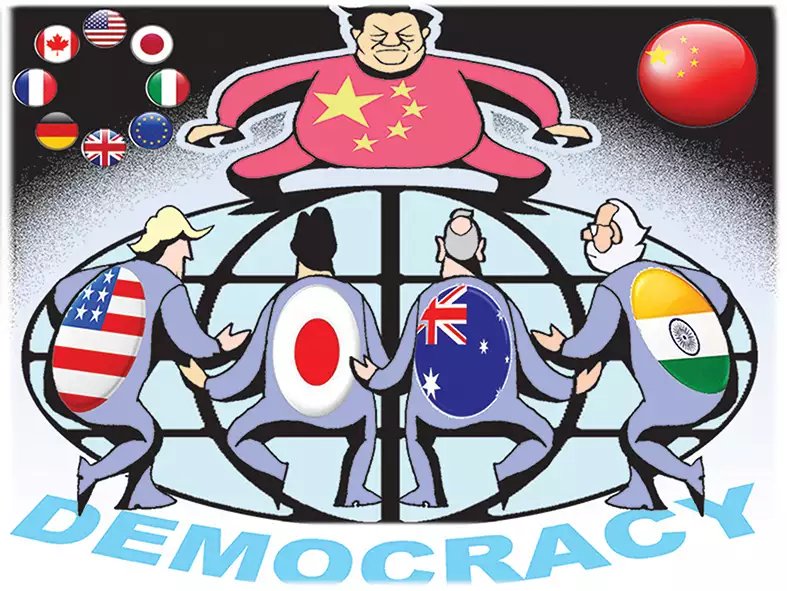
The point that I want to get accross is that in the near future there will be a blatant attempt by the CCP and other authoritarian regimes to undermine the Democratic Model with every crisis that the world is going to encounter. Every aspect of our response to any crisis will be measured to its very fundamentals and compared to the response made by other models of governance, so that the cheer leaders of the corresponding models will have something to brag about theirs, all the while looking down upon the opposing camp. India’s role is to lead the charge of Democracy, even if it means taking the baton from the US. India being the largest democracy and advancing as an economy of the 21st Century should not shy away from shouldering the responsibility of upholding democratic model across the world. To that extend, India could build a Group Of Democracy or GOD where it could incorporate leading democratic countries to join forces to protect and uphold democracy as the best form of governance. This is specifically done to counter China’s model of governance and to bring leading democracies under one roof. Democracies has their power rooted in the people of thier respective countries and no other form of government can ever match the legitimacy that democracies command. This notion makes the decisions of democracies well informed and ascertained. With this grouping, the idea is to uphold the legitimacy and supremacy of democracy and counter the narratives like the ones set off by regimes that crushes students in the middle of the street with tanks, against democracies.
Within the GOD, India should also defend its idea of democracy, its variant of secularism, human rights and diversity and not get smothered by western ideals or try to look for west’s validation. The West has a pretty big role to play as well, as it would be advisable for it to shed its unwarranted sermons on India’s democracy and human rights especially its politically motivated Indices and Reports that it have employed forever against India. India can be a vital player in sustaining West’s ever loosening foothold over Asia, as a democratic ally. If the West itself undermines everything that India stands for, it is only comparable of the West shooting itself in the foot. The US could stop criticising India via its US Council for International Religious Freedom (USCIRF) report, for India is way more diverse ethnically and religiously than US could ever get. It is hilarious that a country that is built on top of the extermination of tribal populations to such levels that even authentic specimen of the same is virtually unavailable, goes on to lecture a civilization that have only welcomed and sustained all the cultures that have set foot on their land. The EU could stop dictating terms to India on its Kashmir policy as it is a bilateral issue in which the EU is not a part of any dialogue. Strengthening Democracy is in everybody’s interest especially when there is a revisionist power going all out to undermine it at every now and then in order seek legitimacy back home.
SEEK PARTNERSHIP AGAINST CHINA
There shouldn’t be any denial that China is going to be India’s rival numero uno. This is not out of choice rather out of compulsion. India may want good relations with China but China doesn’t see India in that way. Since inception, China has seen India as an enemy state and had sided with Pakistan to undermine India’s sovereignty and interests. It is a fact that China understands that if there is any country that can match or even undermine China’s status in terms of population (which we already surpassed), military, economy (which we are on the way) and soft power (which we are miles ahead), it is India. If India gathers momentum and starts accumulating wealth which translates into enhanced military capabilities, China believes it will have a tough time dealing with India. For years India saw this dream of an Asian Century where China and India could lead the world together. Though China reiterate its support to this deam publically, internally it doesn’t want to share such power with India or anybody for that matter. It is only India that still tows this line and I believe that it is high time that we see through Beijing’s real intentions and come to term with the reality at once. During the peak of Indian and Chinese dominance in the Medieval period, both countries commanded more than 60% of the world trade and often taken the top spot of being the World’s largest economy. In the 21st century both countries are moving towards to regain their rightful spots in the world, but the catch here is, unlike the Pre colonial era, China with CCP at helm wouldn’t want the power and influence be shared with India. India should also realise the fact that China fears India’s resurgence and its understanding of India being the only real rival to China’s dominance in the world. China has understood this long back, so should India and start acting like a juggernaut to Chinese ambitions and designs. To cater to that demand in the short term, India should seek alliances and partnership with like minded countries to ensure our stand on the ground is firm and strong!
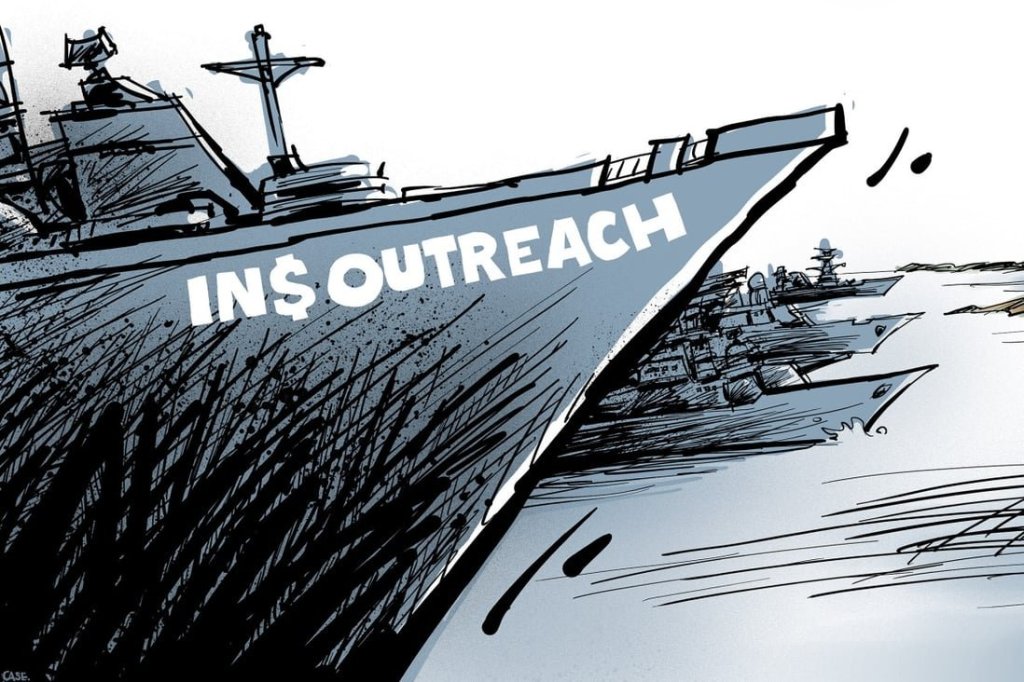
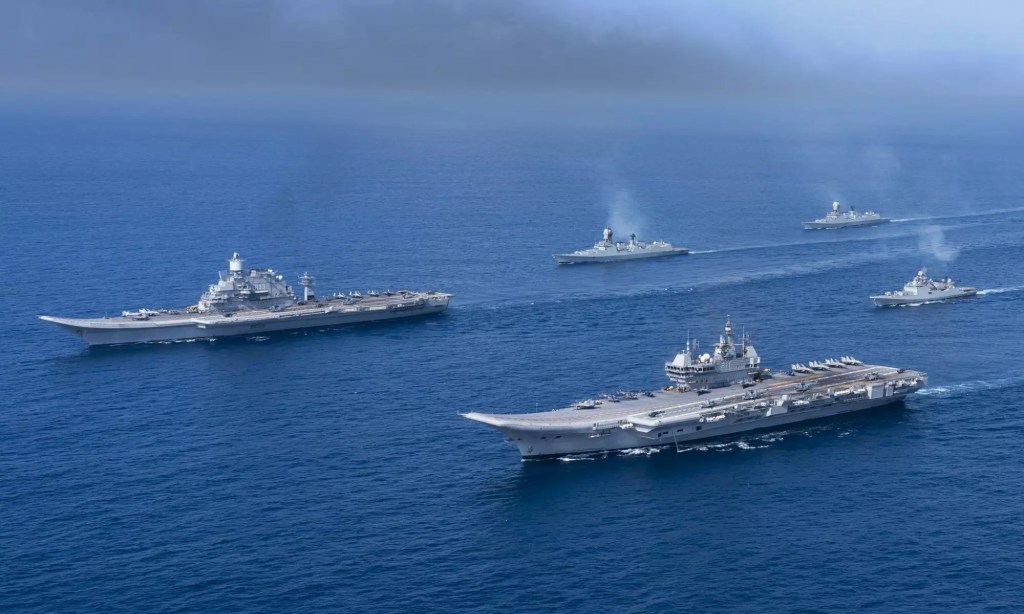
India should give more emphasis on QUAD by taking the current engagements to the next level. India shouldn’t limit itself from taking the name of China for the agression that it displays at LAC or elsewhere and join the QUAD to condemning the same. This should act as pressure to Beijing when it demonstrates unruly behaviour at the LAC. The increasing importance of Indo Pacific in the Geopolitical calculus is good sign for India as more powers are genuinely interested in this region. The western powers look forward to seek cooperation with India to counter China at sea and through this, India will garner military technology ( Germany’s intend to sell Diesel Electric Submaries, US selling MQ 9 Reaper drones and Jet Engine Tech, France keen to make Nuclear subs). India is also ready to share the space with like minded powers in Indian Ocean Region and this will bolster India’s defences against China’s evergrowing presence here. India shouldn’t also shy away from cooperating with ASEAN nations in the defence sector, where these countries actually faces the brunt of Chinese aggression in the South China sea. India’s recent moves in the region of holding bilateral exercises with Vietnam, Malaysia, Indonesia and sale of BrahMos Supersonic Cruise Missiles to Philippines is a welcome step towards expanding India’s footprint. More such defence exports should be done in the region in a display of muscle flexing towards the Chinese who never shied away from arming Pakistan to the teeth. Recent Joint Exercises with ASEAN ( ASEAN-India Military Exercise AIME) is a example of India stepping up the game in South China sea. Military engagement, Economic Might and Diplomatic smartness that India flaunts, will go a long way to ensure success in dealing with the dragon.
CREATE ALTERNATE INSTITUTIONS
The current global institutions like the World Bank, the IMF and the UN are all products of Western Hegemony. They are the relics of the Victors of the World War 2 and are specifically designed to uphold western supremacy. The world, after 75 years since the formation of the UN, the WB and the IMF, is a lot different and these institutions have fundamental design flaws that the status quoist powers never really cared to rectify. The UNSC doesn’t represent the reality of 21st Century and nor do it fulfills the objective that it was created in the first place ie; to avoid war, thanks to the politics that dwarfed the agenda. It is really high time for them to either mend themselves to accomodate the aspirations of almost 8 Billion people or get sidelined in the new prism of power sharing soon to emerge across the world. India has been trying fervently to get its due on getting a permanent membership at the UNSC. Despite being the largest supplier of troops to UN Peacekeeping force in the world, India has not got its due yet. In fact Indian troops are assuaging the fires fanned by the Permanent 5 member all across the globe and still its role hasn’t got the required recognition. My humble submission is that its time for India to stop engaging in Idealist approaches and trying to be the good boy in the classrom to seek the teacher attention when it can graduate to become the headmaster of a new grouping of sorts.
I am not suggesting India to build a new UN or UNSC, but it can start small and certainly build smaller alternatives to development funds and banks. One proposal will be to build a whole new global development bank/fund that goes with India’s One Sun One World One Grid (OSOWOG) project. That fund could be named as the One Bank. As OSOWOG will require millions of dollars worth of investment, One Bank will enable seemless financing and this bank will be India’s alternative to the likes of the World Bank. The One Bank can also finance countries in distress due to war, economic meltdown, political instability or climate emergency, acting as bank built by the Global South for the Global South. This way the Global South could effectively stop taking diktats of the Western IMF to secure bailouts. Such an alternative will pave the way for the Unity of Global South and protection of its interests. This way India along with like minded Global South countries and the “Vanquished” powers of World War 2 (Japan and Germany) can seek to build alternative World Order that is truly democratic and representative of the 21 st century World reality.
CONCLUDING THOUGHTS
The road to Pax Indica is neither narrow nor congested, it is a highway thats opening up for India, finally after 75 years since its independence. Its time that we take our momentum forward and strap ourselves to the fastest lane to achieve the glorious World Order that is driven by a democratic and economic powerhouse that represent the force of goodness in the world.

 Strategic Indian
Leave a comment