DEFENCE
PM Modi’s recent visit to the US and then to France furnished one of the most important catalysts to bolster India’s defense manufacturing capacity. The recent agreements on Jet Engine manufacturing with both US and France and submarine development, particularly nuclear powered one with France, extend unmatched capability to Indian Armed Forces. I believe these deals are nothing short of a coup for Indian diplomacy, only to be rivaled by the Civil Nuclear deal!
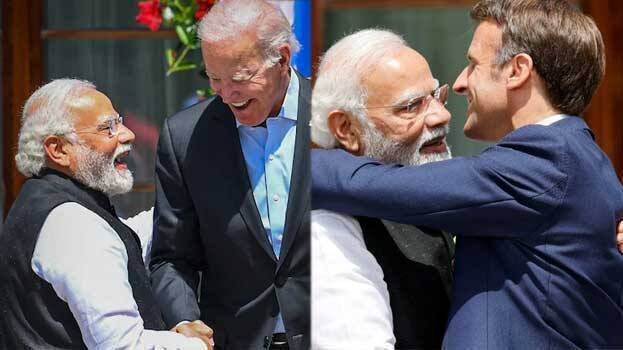
The unprecedented access to cutting-edge technology developed by the West is symptomatic of the rise of India in their geopolitical calculus. For instance, the US sanctioned us in 1998 over the Operation Shakti Nuclear tests, 25 years since that, India has now been rolled out a red carpet by the US for sharing Critical Defense technology like the Jet Engine. The development puts an end to the technology-denial regime, which began in 1998 and had obstructed India’s pursuit of an advanced combat jet engine technology.
Let me also remind you that the technology around manufacturing jet engines capable of powering fighter aircraft is very closely guarded and remains the biggest impediment for countries wanting to develop their own combat aircraft. The deal assumes significance because very few countries around the world have the know-how to develop their own jet engine. So far, only the US, Russia, the UK, and France have the expertise to develop jet engines independently.
WHY INDIA NEEDS THE JET ENGINE TECHNOLOGY?
As mentioned earlier, jet engine technology is vital for the development of fighter aircraft by any nation, yet mastering this core technology is a tedious, costly affair. For countries that aspire to become superpowers with the least dependency on any nation for self-defense, mastering such key technologies is a must. In fact, India has been ambitious about developing its own jet engine, and to this end, it sanctioned the Kaveri engine project in 1989. However, DRDO’s Gas Turbine Research Establishment (GTRE) could not achieve the desired results after multiple attempts. This engine’s thrust and power figures were not adequate to meet Indian Air Force’s operational needs. Though the project started as a part of Tejas fighter development program, due to its failure, this had to be decoupled from Tejas program, and the aircraft was fitted with GE 404 engine.
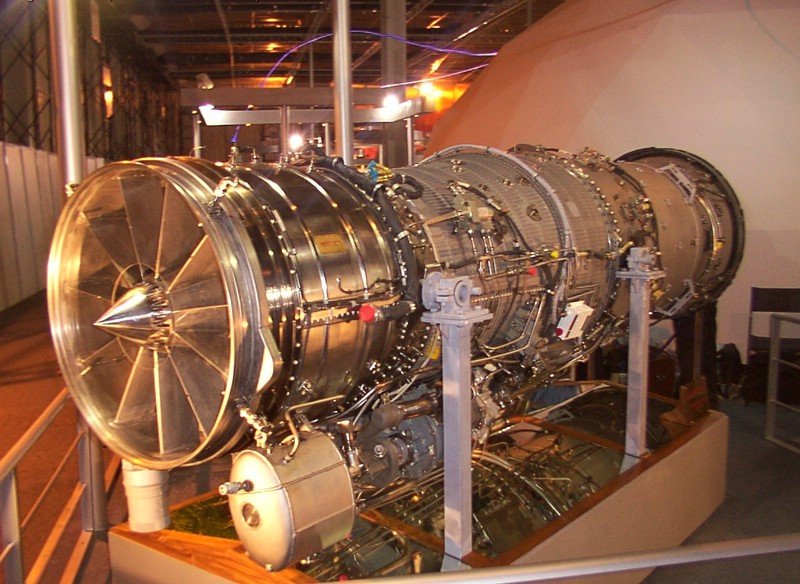
India has been on the hunt for foreign development partners for reviving its Kaveri Engine program, yet it was futile in its efforts for years. With a handful of countries mastering the technology and metallurgy needed to make combat jet engines, most have been unwilling to share it with other countries, including India. Yet all these are going to change, as now the US , UK, and France are in a race to help India build its capacity to create Made in India jet engines.
WHAT AND HOW MUCH OF THE TECHNOLOGY IS GETTING TRANSFERRED TO INDIA?
FROM THE US.
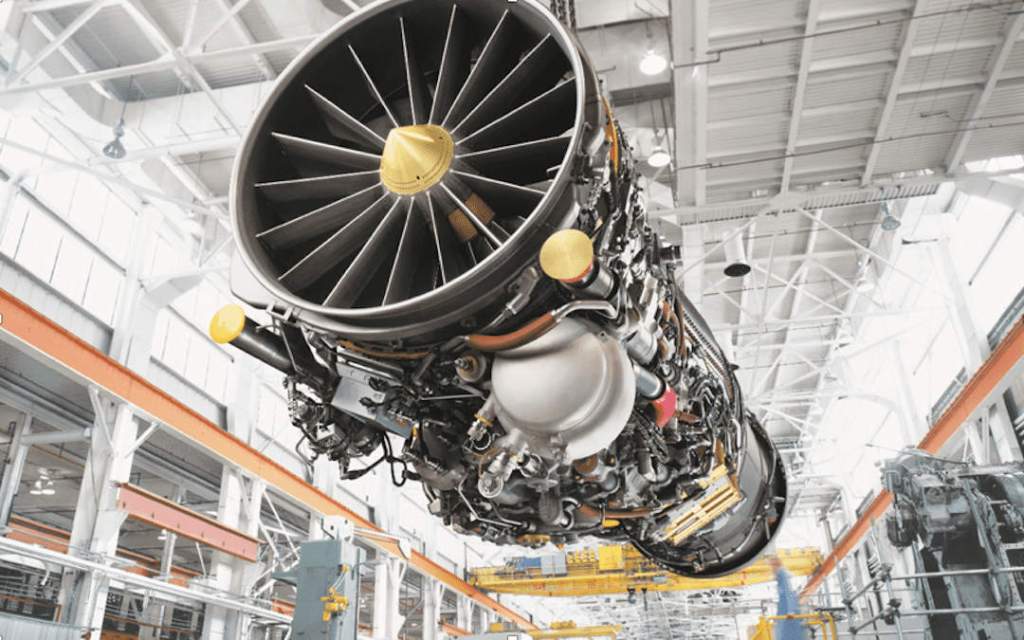
We will start off with the US as it is the first country we concluded the MoU with. The announcement was part of Prime Minister Narendra Modi’s agenda on his state visit to the United States of America (USA). The agreement paves the way for the potential joint manufacturing of GE’s famous F414 engines in India. This engine will power India’s homegrown Light Combat Aircraft (LCA) Tejas Mk2. Giving new wings to the India-US ties, US jet engine manufacturer General Electric (GE) and India’s Hindustan Aeronautics Limited (HAL) have signed a Memorandum of Understanding (MoU) on Thursday, June 22 to produce combat aircraft engines for the Indian Air Force.
As many as 75 F404 engines have been delivered and another 99 are on order for LCA Mk1A by GE, it said in the statement, adding that eight F414 engines have been delivered as part of an ongoing development programme for LCA Mk2. The GE website says more than 1,600 GE F414 engines have been delivered, and they have clocked more than 5 million flight hours. India is currently planning to equip its Tejas Mk2, Advanced Medium Combat Aircraft (AMCA), Twin Engine Deck based fighter (TEDBF) with GE 414 INS 6 engine creating much needed logistical commonality. With such ambitious plans, GE understands that the Indian Forces may need more than 500 jet engines in the near future, which necessitated the transfer of technology.
It said the pact will put the company in a strong position to create a family of products in India, including the F404 engine that currently powers the LCA Mk1 and LCA Mk1A aircraft, highlighting GE Aerospace’s selection for the prototype development, testing and certification of India’s ambitious Advanced Medium Combat Aircraft (AMCA) programme with its F414-INS6 engine. In addition, GE will continue to collaborate with the Indian government on the AMCA Mk2 engine program.
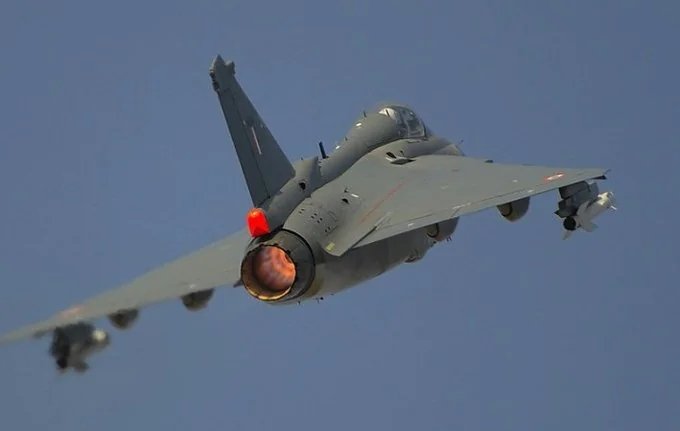
Apart from that, India needs reliable engines for it fighters. Western Jet Engines are far superior to the Russian ones on any given day. General Electric GE 404 engine powering the Tejas MK1 aircraft has been doing duty without any hiccups for almost 2 decades since the first flight. India needs both quality and quantity , former being the primary priority to deal with China.
The initiative on Critical and Emerging Technology (iCET) set the tone of this tech engagement a year ago. The agreements signed during Modi’s visit represent the next stage of the iCET partnership. While the fulfillment of these agreements in the upcoming months will certainly depend on several factors, including the extent of tech transfer and application of US strategic export control regimes, the tone for deeper cooperation is set. India and the US are capitalising on the opportunity presented by the momentous geopolitical shifts in international politics and India’s tech transformation.
India had tried to get this engine technology back in 2012 when it was looking to commit to an order of 99 engines. The 2012 deal had 58% technology transfer, while the current agreement of 80% transfer of technology reflects the level of trust India evokes in the U.S. and the strategic priorities that the countries share. While the final cost is yet to be worked out, the official said the cost is indexed to the 2012 agreement, based on which the current cost for 99 engines should be under $1bn.
The defense official said that in addition to US Congressional approval, there are some commercial terms that are yet to be finalised. The official said it will result in a shorter turnaround time for maintenance, repair, and overhaul, as well as access to new generation technologies that will percolate to other sectors. The deal also shows that the US trusts our Intellectual Property Rights (IPR) regime and that the technology would remain secure. The US has shown confidence in our military systems also, the official added.
FROM FRANCE.
In July, PM Modi visited France, where he was invited as the Guest of Honor for the Bastille Day parade. This invitation was also an indication of the high regard that France holds for India. France, which was snubbed by it own allies (US,UK,Australia) in 2021 with the announcement of AUKUS, is clearly looking for a staunch reply in the Indian Ocean Region. India seems to be that partner for France to get back at the AUKUS. And why shouldn’t New Delhi court Paris, for it has been seeking cooperation from the US to build Nuclear Submarines (SSNs) and yet Washington chose to deny it for India while providing the same to Australia under the AUKUS deal. The visit somewhat solidifies the rumors that have been flying around since 2021 after AUKUS fiasco, that France will emerge as a key partner to India by cooperating on Nuclear Submarine development.
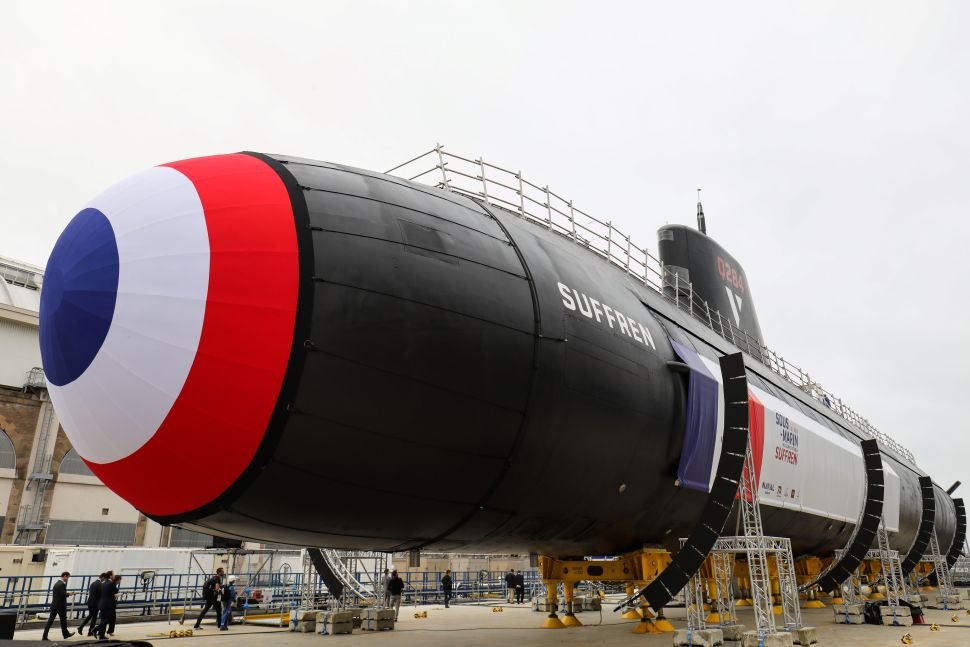
With PM Modi’s visit, some groundbreaking agreements have been reached on a surprisingly new Next Generation Engine Development. “A road map on this project will be prepared between Safran and DRDO before the end of this year,” the joint statement issued after bilateral talks between Prime Minister Narendra Modi and French President Emmanuel Macron said. While on the submarine front, the two leaders also welcomed the Memorandum of Understanding (MoU) between Mazgon Dockyard Ltd., Mumbai, and Naval Group for the construction of three additional Scorpene submarines. “India and France are ready to explore more ambitious projects to develop the Indian submarine fleet and its performance,” the statement said, citing future collaboration on more complicated SSN submarines. Both Safran and HAL will also support industrial cooperation for motorization of heavy-lift helicopters under the IMRH program with Safran Helicopter Engine, France. To enable progress on the IMRH program, a Shareholders’ agreement between HAL, India, and Safran Helicopter Engine, France, has been concluded for engine development.”
Effectively, New Delhi is holding its horses on the level of technology getting transferred from both the US and France. Either way, this partnership is only going to be fruitful for India, enabling it to master the best technology to become self-reliant. Comparing to 1980’s China, where it became close with US and had access to some key technologies, India is at advantageous position as it has presented itself to be better partner than Beijing and is being offered access to higher technology than the former. All these changes in the view of India as a key reliable partner, are happening at a break neck speed, especially after the Ukraine Crisis and Covid. We will seek to understand why the West is now keen to support India in its ambitions to become a superpower and why it changed its stance of ignorance.
WHAT CHANGED THE STANCE?
The long and short of it would be the need to contain rising China, especially Xi Jinping’s China. Adding to it, the geopolitical ramifications of both Covid 19 and the Ukraine War accelerated the Western compulsion to bolster a democratic India. I believe the time has come for India, especially after Covid, India has portrayed itself as an alternative to China , throw in some tensions at LAC with China and the presence of a strong government in New Delhi, India could not have been more irresistable to the West than ever. India being the largest democracy and worlds most populous nation, it is the only strong bet against a belligerant China. Quoting from the book ” The Clash of Civilisation” by Samuel P Huntington, the emergence of new great powers is always highly destabilizing, and if it occurs, China’s emergence as major power will dwarf any comparable phenomena. Lee Kuan Yew observed in 1994,” The size of China’s displacement of the world is such that the world must find a new balance in 30 or 40 years. It’s not possible to pretend that this is just another big player. This is the biggest player in the history of mankind.”
Now, the West have woken up, and smelled the coffee, the 30 years that Lee had mention have almost passed and now they are in need of a big player that has the capacity to take on China. It is no wonder that the only country that has the capacity to challenge China in the future is India. In terms of population, potential, and capacity, only India can be the rival for China. It’s in the West’s interest that a strong India emerges. India can act as the bulwark of democracy against authoritarianism, expansionism, and barbarism. So the West should support India by bolstering its defenses against the belligerant Dragon.
India is a democracy, and at the heart of any Western argument on any conflict lies democracy, yet the West have always bolstered or supported Autocracies to meet its ends; be it cooperating with China to bring down USSR, siding with Military Regimes in Pakistan against India or batting a blind eye towards the Saudi regime’s human rights violations for the sake protecting the oil interests. It is time that West ditches these double standards and acts genuinely on upholding democracy. China will remain autocratic for some foreseable future, as the CCP has found ways to keep its legitimacy alive through methods that can be scrupulous at best, that sort of mask any rumblings against it at any given moment. Also, corruption and barbarity run so deep inside the CCP that it’s virtually impossible to break out of its cocoon. With the rise of China both economically and militarily to the status of the world’s numero Uno, it has earth-shattering consequences, particularly for the West. So the West has two choices in this game, either build capacities and capability in the long run to counter China in all sectors for the rest of the century and beyond, which I don’t believe is possible as Both Europe and US cannot rival China in sheer numbers in terms of population, capacity etc, and where it has an advantage over China is technology, that card has not much of a life left as eventually China will be on par. Another option for the West is to Bandwagon the Dragon, officially completing the Chinese dream of World dominance and this is quite unlikely as the West won’t allow any other Civilisation to supersede it (this also applies for India as well) so there is likely to be a war as what is figuratively said as Thucydides Trap by experts. I can explain this phenomenon with a example, after the World War 2, the global power distribution changed dramatically with the UK being supplanted by a player from across the atlantic; the US, as the world’s new Superpower. This transition happened rather peacefully without any fight. Remember the UK is not any player that is handing over the hard earned Crown of Superpower status to the US, it had been the biggest empire the world had ever seen, even to this day and had won countless bloody, brutal battles to earn that title. So why did this transition turn out to be peaceful? If I were to take cue from Samuel P Huntington, it is because the UK and the US shared the same civilizational roots, and the UK didn’t mind handing the baton to one of its own That is why it was peaceful.
But to expect the same level or any level of commeraderie between the US and China during the eventual transition of power is like living in fools paradise. It is quite obvious that this eventual transition will not be peaceful to say the least. Also unlike the world being divided into 2 Axis of power in the Cold War on the basis of ideology, economic structure and institutions, this new Cold War between China and the US won’t have such broadly visible bifurcations, rather things will be multiple shades of gray.
Where India would find a place in all these commotion is to be seen as the country embark on balancing act, though not at the scale that it had to during the Cold War period, but a more nuanced stance which leans a bit towards the US . This is because India is being asked to take a side between a hegemon that seeks some partnership v/s a belligerant bully that seeks to grab land and undermine India’s sovereignity at a moments notice. So, the current geopolitical stance of India and the West firmly aligns.
HOW SHOULD INDIA PROCEED?
The current position that India is in, is hard earned through tact diplomacy and growing economic stature. To deal with all the noise of competition and covert actions, India needs to prioritise its interests before anything else. India needs to utilize diplomacy, technology, and strategy to deal with China. The proposition of technology transfers from the West should be welcomed by New Delhi and suitably utilized to improve India’s Military Industrial Complex. India is not a vassal state of the West in Asia, and the West knows this, yet this position is beneficial to India, as it places it in a strong position during negotiations. The US, particularly after Ukraine, wants India to cut its ties with Russia, but India can’t because of the close military relations New Delhi and Moscow have. The US is now seeking to reduce that dependency and thus offering key military tech and weapons to India.
Now India needs to milk the desperation of the US to its advantage and get its hands on key technologies that will bolster its defenses against Chinese belligerence. We may have been on the opposing isles during the Cold War, yet India and the West should come together to bolster democracy’s defense against China. These agreements, I believe, are just the beginning of the glorious partnership ahead.
Not everything is hunky dory, however, as there are systemic and structural challenges that may hinder progress in this partnership, and that has to do with myopic view of the West and not of India. As mentioned earlier, the West sees the world through the prism of Civilisations annd what we saw in 2021 where the US, the UK partnered with Australia instead of India, despite latter being the most important player in the region, surely is choice of civilizations over strategic thinking. This reflects the mindset of the West that they ll only prefer to share advanced technology and resources within same civilizations and not anybody else.
Another issue is inherent to the nature of democracy, that is, change of administration and processes. Biden administration is fully backing the tech transfer, but he has less than a year in office before the elections, and the results of it will decide the proceedings of the deal. Though India enjoys bipartisan support across the party lines in the US, one can not be dead sure if the future president will not derail the arrangement. Also, getting approval from the US Congress is a tedious process that will also require both consensus and time.
CONCLUSION
India needs to prioritise its needs and interests above anything else. It needs all the kind of technology to make it a superpower, and it is great to see that finally, the Western powers are now huddling to pull the fence sitter to its court. It is heartening to see India scaling remarkable heights enough to negotiate deals of transferring key critical technology. We should continue the momentum.

 Strategic Indian
Leave a comment