
HISTORY AND CULTURE
This article was submitted by me towards the final assessment of my core module of International Relations MA; Analysing World Politics taught at the University of Kent in Canterbury, UK. The research work on developing this piece of literature was intuitive as well as exciting, as I embarked on a journey that I have never travelled before. I would like to thank my professor Dr Tim Aistrope who constructed the question; “To what extent are Feminist approaches to international relations Eurocentric?” and motivated me to think in that direction. I hope those who read this article, find it useful and intuitive as much as I had the pleasure of doing the research work to produce it. Thank You!
Feminist approaches to international relations have revolutionised the discipline by exposing the gendered power structures, dynamics and inequalities that exist within and between states (Cohn, 1987). Feminist critique showcased how International Relations acted as “a sphere of male influence and action” (Youngs, 2004). Critiques have targeted the strand of feminism that dominates in international relations, highlighting the potential Eurocentrism in some of the scholarship associated. I firmly believe that the feminist approaches that is currently prevalent in the field to be Eurocentric in its theory, application and formulation. Though feminist perspectives had added invaluable contributions to the international relations like bringing attention to issues of women’s experiences of war, sexual violence being used as weapon of war and gendered division of labour in the economy (Enloe, 2014), yet concerns about Eurocentrism raise many questions. The dominant focus on Western feminist experiences risks overlooking the lived experiences and realities of women in other parts of the world. This, I believe, has led to immature generalisations and assumptions, which seldom reflect the complex realities of gender, culture and power across different societies.
The historical domination of Eurocentric understanding of feminisms in international relations has shaped feminist analyses in ways that perpetuates inherent biases unintentionally, like focussing excessively on concepts like liberal feminism, state sovereignty or negligence of diversity of lived experiences of women from the periphery. In this essay, I intend to dissect the nuances of feminist approaches that dominate international relations currently, understanding the historical biases from which such notions emerge, why the focus has always been on the western feminism and finally we will understand why marginalisation of intellectual discoveries (theories) from the global South gets ignored. We will also discuss ways to mitigate these issues while being vigilant on the issues that currently plague the acceptance and proliferation of southern theories and discoveries across the world like their Northern counterparts. We will do this by acknowledging the limitations of the existing paradigms, by placing the non-Western experiences in the centre and engaging with localised knowledge to dismantle universal claims, and critically interrogating Eurocentric feminist IR theories.
Through this, I intend to dismantle the inherent biases of feminist IR theories, so that it can move beyond the potential Eurocentrism and continue its vital work of exposing the gendered inequalities in the international sphere. This is important because, international relations, even today, relies mostly on the popular lines of “geopolitics”, “international cooperation”, “security” and “free trade” which are inherently masculine and patriarchal and the emphasis on a feminist perspectives that has zero biases grows even more essential (Chakraborty, 2017, p. 55). I believe that international relations need to urgently re-evaluate the relevance of the word ‘international’ in its truest sense and not use theories associated with it (including feminism) as a Western tool to dominate the ‘inferiors’ of the global South.
We will start with root cause of the Eurocentrism that we witness in the formulation and propagation of feminist theories. I believe it has historical roots and relate to colonial practices that were imposed on the Global South by the colonisers. Let’s start from the very beginning. The world portrayed by the theoretical domains of international relations, including the feminist theory, reminds one, of a medieval map, in which most parts of the planet were still undiscovered (Chakraborty, 2017, p. 57). A glance of the key texts related to the discipline as well as its dominant theories will reveal that it risks of basing the understanding of ‘international’ on three regions: Europe, North America and Australia (Chakraborty, 2017, p. 52). The literature on which feminist theories builds its foundation, primarily borrows its content from the political history and experiences of Europe and North America, all the while ignoring the rest of the world. The inheritance of the discipline of international relations is the colonial knowledge base is, and it is evident in every theory that gets spun off from that body of thought. Knowledge is the key element that helped European civilisation gain and sustain its hegemony in the last few centuries (Cohn, 1996), and in the case of Eurocentricity of a relatively new concept of Feminism, this phenomenon can be found to be active. Data brought from the colonised, acted as underpinning for nineteenth-century European debates about the nascent matriarchy and the origin of the family and later these ideas found their way to literature produced by feminists such as Margaret Mead. Feminism deals with justice, and here universal justice is built on an abstract understanding of rationality, which is Eurocentric (Benhabib & Cornell, 1987). It can be safely assumed that ahistorical understanding of the current world order can never enable us to fathom the contemporary world around us.
The biggest change in the Northern understanding of feminism was ushered in by expatriate scholars from Gayatri Spivak to Deniz Kandiyoti, who developed a new broadened understanding of the discipline in metropole’s universities (Connell, 2014, p. 519). Mohanty had identified that Northern gender scholarship always had colonial gaze and she steadfastly challenged stereotyping of the “third-world women” in Northern feminist thought (Mohanty, 1991). Their critique has been effective in a sense that, in the last twenty years, the feminist scholarship in the US and Europe have acknowledged the global difference and context.
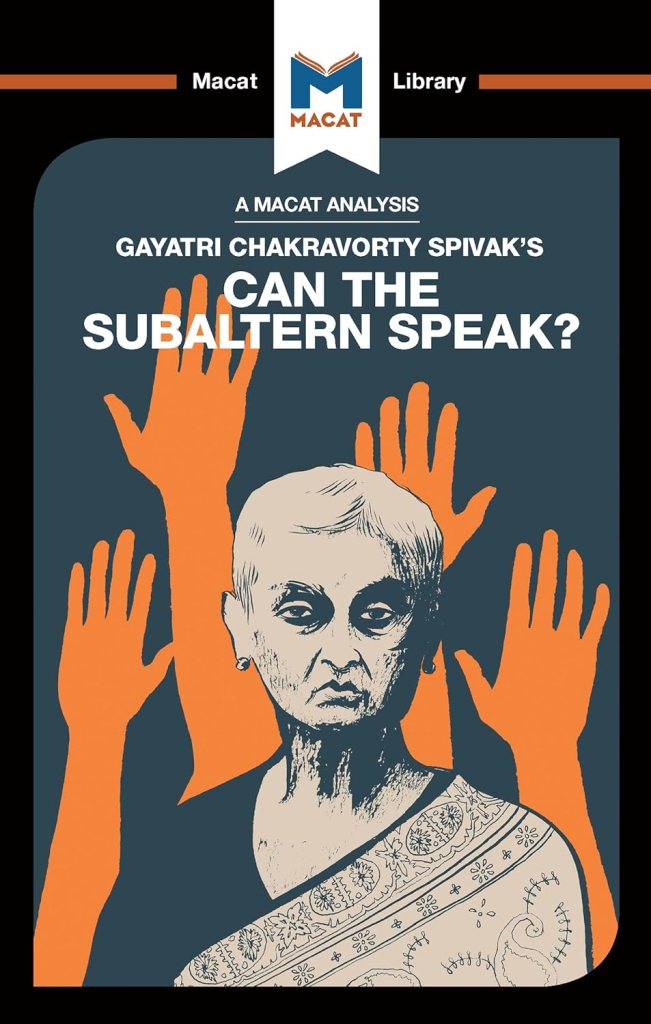
The reason why the current understanding of feminism in international relations is Eurocentric is due to the overemphasis of Western feminism and marginalisation of theories from peripheries. The works of first-generation feminist theorists like Tickner, Moon and others, revealing the gendered power structure and inherent masculinity that shaped state structures and relation, were thoroughly dependent on Western theories (Chakraborty, 2017, p. 51). It unfortunately obscured experiences and realities of the subaltern women. For example, the postcolonial societies with neo-imperial regimes of today, has situated themselves through their history, like the Blacks in the US or Dalits in India, hasn’t been properly acknowledged by European idea of feminism and not given enough space for their diverse experiences. In fact, these groups are relegated as the ‘other’ in European theories and their understandings are equated as regression in the Eurocentric political and social theories (Agnew, 2004). Fundamental problem with such literature is that almost all feminist thought that has the capacity to be accepted around the globe is based on the methods and concepts made in the global North. If you go through major feminist literature, most of them works on the assumption that data and politics get produced in the global South, yet the same global South cannot produce theory. Theory here means the moment in a larger social process of knowledge formation that transforms data in some way moving ahead (Connell, 2014, p. 526). Though in the contemporary feminism, there is an increase in emphasis on global diversity yet those Eurocentric framings, which are derived from the history of the metropole and its overseas empire, which often doesn’t provide the postmodern fluidity and multiplicity of identities. They are examples of “reading from the centre” which is characteristic of the global Northern theory (Connell, 2007). The problem with such bias is that it may give us a false understanding of the nuances of feminist knowledge and phenomena like patriarchy, identity and gender.
The periphery does produce theory – the theory which boasts of depth and importance, yet the feminist thought is situated in an ever-present global economy of knowledge that is structured by lack of parity between the global metropole and periphery, so these theories get obscured. According to (Hountondji, 1997), this problem shouldn’t be viewed as a simple imposition of Western thoughts, but as a problem of global division of labour in the creation of knowledge, which has its roots in imperialism. The global South is regarded as a source of rich data and not acknowledged for its contribution. From a postcolonial perspective, the colonial world served as rich source of data for science, and these were then transferred back to the metropole, which is synthesised there to classify, and to build intellectual structures that created and sustain the knowledge hegemony of the metropole. Also, there were specialised personnel who created and converted the research in applied sciences, which, in the format of applied form of knowledge is returned to the peripheral states and used by the colonialists in their respective colonies (Philip, 2004). Even in the postcolonial world, the periphery remains a rich source of data and content and the metropole continues to be the central site of theoretical innovation which now possess corporate research institutes and databanks. Not just that, to become a scientist, one must read leading western journal articles produced in the metropole, learn the techniques developed there and gain recognition there. This way theoretical frameworks produced in the metropole get embedded even in the peripheral intellectual work, due to the way the economy of knowledge is organised (Connell, 2014, p. 527). This is what happened in the case of feminist approaches in international relations as well. One key example that I can provide is this, the most influential text of feminist theory, the Gender Trouble by Judith Butler, in which only one author who is not Western has been mentioned and that is Gayatri Spivak. Another one is the British survey called “Theorising Gender”, which contrastingly doesn’t speak of a theorist who is based out of a non-European nor North American region (Butler, 1990).

Further speaking of marginalisation of feminist theories and literature produced in the periphery, this obscuring happens is through the omission of some controversial content by publishers when they translate the work of southern theorist into English. One key example is the pioneering work of the feminist theorist Heleieth Saffioti’s called A Mulher na Sociedade de Classes (Women in Class Society) (Saffioti, 1978 (1969)). This book had quite a few references to socialist politics and reflected the Marxist orthodoxy of the author. But when, this book was translated to English by the Monthly Review Press, it omitted two chapters that didn’t interest North American Marxists (Connell, 2014, p. 528). Thus, the book was presented according to what the publisher thought was fit for its consumers and not what the real author originally intended. I am sure that such incidents wouldn’t happen in the case of Eurocentric literature being distributed among the global South.
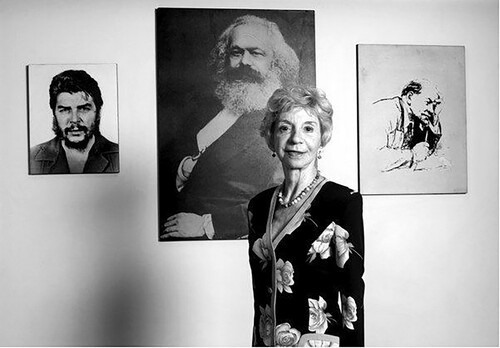
Western feminist theories have a foundation of universal justice, which is built on abstract Eurocentric concept of rationality. One thing that is quite noticeable is the overarching attempt by Western feminists to establish a universal idea and definition of gender oppression and feminism. As evident from the experiences we had discussed now, any unidirectional and linear theories and world views are not effective enough to understand every society (Chakraborty, 2017, p. 52). Oppression faced by women in the First World cannot be equated as the same as that of the oppression faced by women in the global South. For example, in the South, power dynamics between men and women lead to rape and assaults on women, yet that might not be the case in the global North. From the first UN World Conference on Women in 1975 onwards, the hegemony of Northern perspective of feminism was challenged by many like Chilla Bulbeck, as she posed questions on global solidarity and inequality at the same time, which highlighted the ambiguities of project of feminism across the world (Bulbeck, 1988). Many black feminists challenged the universal models of women’s persecution and subjugation put forward by White liberal and radical feminist theorists, within the North. One reaction to this issue is the outright rejection of universalised assumption of gender by global North and this is specifically done by Afro centric knowledge projects explained by Obioma Nnaemeka (Nnaemeka, 2005) and in Islamic methodology for feminism proposed by Fatima Mernissi (Mernissi, 1987) which points towards the existence of diversity in global gender discussions.
On the other hand, many southern feminist scholars like Maria Lugones, Silvia Rivera Cusicanqui and others have written extensively about gender, colonialism and patriarchy. Yet on of the key observation we can make out from their contributions, is that there is no single view of gender or its interactions with that of race, place, class or religion (Asher, 2017, p. 523). This is the biggest difference between global South feminists and Northern Feminists. Southern feminists respect the diversity and acknowledges the varied landscapes women across the world come from. They do not engage in attempting a universalised gender or feminist perspective. Many southern Feminists have raised their voices against this universalised feminism and connotation of gender like Silvia Rivera Cusicanqui who likens these attempts as the ‘vicissitudes of neoliberal multiculturalism” where indigenous people of the east and west are getting NGOized, hegemony of essentialist notions are rising and these people are getting paraded as an adornment of neoliberalism, especially after 1990. (Cusicanqui, 2012). This showcases the utter disregard by hegemonic feminist scholarship and the vehicles of such values (here NGOs) about the values and culture of people other than of Western origin. One key example of the triumph of indigenous women as noted by Cusicanqui is from Bolivia. The consistent efforts by indigenous women through labour unions, ethnic struggles led to the election of Evo Morales, the first indigenous president in South America and subsequent formulation of 2009 constitution that had granted unprecedented rights to indigenous people (Cusicanqui, 2010). Yet, Cusicanqui noted that these contributions were missing from being represented by the state, and even by mainstream Bolivian feminists. This is how universal understanding of feminism and gender can side-line lived experiences of the people who are already marginalised even in their society.
This universalising tendency of Eurocentric feminist have other major consequences and that is of stereotyping and conscious hiding of colonial effects on women. According to (Mohanty, 1984), the Western feminist writings on third world women has colonising tendencies where an attempt is consciously made to produce a composite and singular idea of the ‘third world woman’. They view third world women in as a monolithic, impoverished victims of patriarchy or capitalism, all the while consciously minimising the notion that position of such women also suffer from subjugation through class, religious, national, racial and other historical impoverishments. This obscures the reality of many women around the world who might be going through issues that the Eurocentric feminist scholars may have never come across and or studied upon. Yet avoiding them cannot be accepted, because such attempts may dismantle the global project of feminism that is essential for revaluating the discipline of International Relations.
Now to address the Eurocentricity of the Feminist Approaches in international relations, many scholars have advised active engagement with non-Western feminism and feminists. Postcolonial school has taken on the hegemony of Western thought for long and in feminism too, this school has contributed remarkable criticism and offered commendable alternatives as well. Postcolonialism helps to understand power structures in globalised, neo-imperial world by exposing the power dynamics between Western loci of power and postcolonial developing countries that affect their citizens. Postcolonial feminism emerges from the complete absence of acceptance of the reality that the globalised world of today that is based on uneven power dynamics with women from global South being at the base of the hierarchy. It is both a representative of the women in the global South and is a theoretical innovation that explains vividly, the structures of state relations are based on labour and social exploitation of the subjective position (Chakraborty, 2017, p. 54). Postcolonial feminism is the perspective of the people who are at the base of the hierarchical power structure of the world, which is sometimes referred as ‘subaltern’. Many feminist scholars like Gayatri Chakraborty Spivak (Spivak, 2008), Chandra Talpade Mohanty (Mohanty, 2003) and others have shown how the voice of the powerless and marginalised can be brought to fore. It is this voice that is missing in the spectrum of international relations and feminist approaches, and it is this voice postcolonial school of thought is trying to bring into our understanding (Chakraborty, 2017, p. 55). Spivak has noted an unquenched demand from the radical fringe against the Northern pedagogy on feminism, a demand upon the citizens of the third world to speak up as an authentic ethnic, fully capable of representing her traditions (Spivak, 1999). Postcolonial feminism can refine the current format of feminism that dominates the discipline of international relations, by providing the perspective of the world which was excluded from international relations. It is time for the discipline to reorient and locate itself currently in colonial past of Europe and reread the neo-colonial present, then attempt itself to incorporate other perspective of feminism within its wings (Chakraborty, 2017).
While investigating the contours of the postcolonial feminism, I learned that the biggest flaw of the current understanding of feminism in international relations is the inability of the feminist scholars to place issues of women within proper contexts. The Eurocentric feminist often miss out the details or conducts a poor contextual analysis while they talk about “third world women”. To simplify the understanding on feminism, most western scholars engage in universal definition of feminist ideas, but that would not fit for everyone and for every region. Postcolonial world displays dramatic separation lines that exist between women in terms of their race, class, culture and caste. The experiences of one woman in this post-colonial world will be different from that of the other. The behaviours of the state towards their subjects (here women) are linked to these factors mentioned above. This can be explained by the atrocities that happens against women in Kashmir. The whole state sometimes acts as a masculine and patriarchal structure, where rape is not an aberration, rather it is used as a tool to punish and discipline the dissenting population (Chakraborty, 2017, p. 53). The state sponsored violence and lack of accountability is only escalating the vulnerabilities of the women in these regions, yet the involvement of international communities is far more modest and leaves much to be desired. This example showcases the inability of both the discipline of international relations and the current notion of feminism, to deal with situations of gross violation of basic human rights of women and that’s where the relevance of postcolonial feminism comes in. Postcolonial feminism and decolonial feminism scholarships are marked by diverse genealogies, histories and emerge from multiple locations. The issue of representation is at the heart of post-colonial feminist critiques (Asher, 2017, p. 520). Various feminisms and feminists from the third world, black, intersectional, multicultural and women of colour have now decided to analyse and bring to forefront the different gendered and raced experiences.
Now we have discussed the various issues that the current understanding of feminism within international relation. Through this I have tried to explain the extent to which the feminist approaches in IR are Eurocentric. The issue of under representation of global South perspective within the ambit of global feminism may not be just the cause of bias perpetuated by hegemonic scholarship but can also be amplified by various other issues. I acknowledge that there is existence of some key issues with the global South feminist discourses, that need rectification. Language plays an important role in scholarship and its propagation, and the global South scholars use their own languages to create literature, but it cannot be distributed across the world as such. English, thanks to its worldwide reach, always has a hegemonic presence as a language of scholarship. Dominance of English is only growing, thanks to neoliberal globalisation, translation is expensive and can be biased as we have seen Saffioti’s case (Connell, 2014). Another issue is the tendency of metropole to define Southern feminist as scholars of regional interests, and their scholarships are generally regarded as not important in general feminist theory. Apart from that, within the Southern writing, the problem is not that local content is absent, but local realities are merely reduced to ‘cases’ that is used to explain feminist concepts made in metropole. Many general gender studies from periphery combines data from local areas to be used as examples of a theory from the Western feminist thought. This diffuses the importance of the lived experiences of women from the south mere numbers or stories in some literature while disregarding their potential to create or understand new theories that are from the global South. Another key issue is that today most of research on global South feminism is happening with the help of NGOs and there is an increasing tendency of balkanisation of gender research in Africa as noted by Desiree Lewis on the lines of donor-driven agenda. This can have serious consequences, where gender research may be incomplete and ineffective. There is also a division between global South feminists in terms of the representation of the differential colonial experiences of aborigines in various parts of the world. Decolonialist thinkers of Latin America are particularly critical of the postcolonial feminists even after sharing much of its critique of Eurocentricity the latter (Asher, 2011, p. 525). They call postcolonialism exercised by Spivak and others ignoring the formative role of the conquest of Americas and racialised practices of settlers in Europe. They accuse the post colonialists speaking only for the Asian women colonised by Europe. Thus, this divide is not constructive when it comes to projecting a unified stance against Eurocentric feminism that is prevalent in the discipline of international relations. These are some of the issues that currently plague the efforts of the southern Feminists to bring out theories and experiences of women from global south to the forefront.
So here, I have discussed how the feminist approaches to international relation are predominantly Eurocentric. We have analysed the consequences of such orientations on the overall discipline and within the perspective as well. It is with heavy heart that I found out that feminists who complain about inequality, marginalisation of women in the society and subjugation, has inadvertently committed the same mistake of subjugation and marginalisation a section of their fellow compatriots for the advancement of Eurocentric hegemony over the perspective of feminism in international relations. Call it a conscious attempt, laziness or sheer ignorance, the exclusion of feminist perspective from the global South is black spot on the history of this discipline, which needs urgent rectification. The essay has discussed the origins of the Eurocentricity of feminist perspective right from its origins of the colonial past to the lingering biases of the present. We had also discussed about the overemphasis on Western feminism has led to marginalisation of theories from periphery. Discussion also painstakingly unravelled why theories from the periphery still get ignored and how that system of knowledge economy that is leveraged to the benefit of the Eurocentric feminist still prevails, even today. We also discussed the consequences of the blatant attempt by the Western feminist scholars on bring a universalised definition of gender oppression and feminism, how it obscures the realities and lived experiences of women living in the periphery.
After the critically analysing the issue of Eurocentricity of the feminist perspective, I had discussed some mitigative options that can be exercised to negate this miscarriage of justice. To address the Eurocentricity, it’s been advised to engage with non-Western feminisms and particularly school of thoughts like post-colonial and decolonial feminisms. These schools have revealed the inherent biases of the current perspective and put forward alternatives to fix this. Another fix is to contextualise each lived experiences and theory from the periphery to the realities of the societies where they emerge from. Scholars shouldn’t blatantly apply Western theories in the Southern contexts and realities. We also discussed some of the issues that many global South feminist theorists and theories face, that curtails their universal acceptance like language, lack of theoretical innovation and dependence on western literature that keeps the cycle of marginalisation of southern theories running. There is urgent need to fix this issue to break this cycle. Thus, the feminist approaches to International Relations are somewhat Eurocentric in nature and this cannot remain the way it is, forever, as it can only lead to further inequality and subjugation. There is an urgent need to rectify this injustice and ensure safe and secure world for every woman, regardless of their origin, caste, class or country.
Bibliography
Agnew, J., 2004. Geopolitics: Re-Visioning World Politics. 2nd Edition ed. London: Routledge.
Asher, K., 2011. Latin American Decolonial Thought. Geography Compass, 7(1), pp. 832-842.
Asher, K., 2017. Spivak and Rivera Cusicanqui on the Dilemmas of Representation in Postcolonial and Decolonial Feminisms. Feminist Studies, 43(3), pp. 512-524.
Benhabib, S. & Cornell, D., 1987. The Generalised and the Concrete Other, Feminism as Critique: Essays on the Politics of Gender in Late-Capitalist Societies. Cambridge: Polity Press.
Bulbeck, C., 1988. One World Women’s Movement. London: Pluto Press.
Butler, J., 1990. Gender Trouble: Feminism and the Subversion of Identity. 1 ed. New York: Routledge.
Chakraborty, A., 2017. Can Postcolonial Feminism Revive International Relations?. Economic and Political Weekly, 52(20), pp. 51-55.
Cohn, B. S., 1996. Colonialism and Its Forms of Knowledge: The British in India.. 1st ed. s.l.:Princeton University Press..
Cohn, C., 1987. Sex and Death in the Rational World of Defence Intellectuals. Signs, 12(4), pp. 687-718.
Connell, R., 2007. Southern Theory: The Global Dynamics of Knowledge in Social Science.. 1st ed. Cambridge: Polity Press.
Connell, R., 2014. Rethinking Gender from the South. Feminist Studies, 40(3), pp. 518-539.
Cusicanqui, S. R., 2010. The Notion of “Rights” and the Paradoxes of Postcolonial Modernity: Indigenous Peoples and Women in Bolivia. Qui Parle, 18(2), pp. 29-54.
Cusicanqui, S. R., 2012. Ch’ixinakax utxiwa: A Reflection on the Practices and Discourses of Decolonization. South Atlantic Quarterly, 111(1), p. 95–109.
Enloe, C., 2014. Gender Makes the World Go Round. In: Bananas, Beaches and Bases: Making Feminist sense of International Politics.. California: University of California Press, pp. 1-36.
Hountondji, P. J., 1997. Introduction: Recentering Africa. In: P. J. Hountondji, ed. Endogenous Knowledge: Research Trails. Dakar: CODESRIA, pp. 23-42.
Mernissi, F., 1987. Le Harem Politique: Le Prophete et les Femmes( The Political harem: The prophet and women). Paris: s.n.
Mohanty, C. T., 1984. Under Western Eyes: Feminist Scholarship and Colonial Discourses. The Discourse of Humanism, 12(03), pp. 333-358.
Mohanty, C. T., 1991. Under Western Eyes: Feminist Scholarship and Colonial Discourses. In: C. T. Mohanty, A. Russo & L. Torres, eds. Third World Women and the Politics of Feminism. Bloomington: Indiana University Press.
Mohanty, C. T., 2003. Under the Western Eyes Revisted: Feminist Solidarity through Anti-Capitalist Struggles.. s.l.:Duke University Press.
Nnaemeka, O., 2005. Mapping African Feminisms. In: A. Cornwall, ed. Readings in Gender in Africa. Oxford: s.n.
Philip, K., 2004. Civilising Natures: Race, Resources, and Modernity in Colonial South India.. 2nd ed. New Brunswick: Rutgers University Press.
Saffioti, H., 1978 (1969). Woman in Class Society. New York: Monthly Review Press.
Spivak, G. C., 1999. A Critique of Postcolonial Reason: Toward a History of the Vanishing Present. 2nd ed. Harvard: Harvard University Press.
Spivak, G. C., 2008. Can the Subaltern Speak? Geographies of Postcolonialism. 1st ed. Thousand Oaks: Sage Publications.
Youngs, G., 2004. “Feminist International Relations: A Contradiction in Terms? Or: Why Women and Gender are essential to understanding the World ‘We’ Live In”. International Affairs, 80(1), pp. 75-87.
 Strategic Indian
Leave a comment